 By james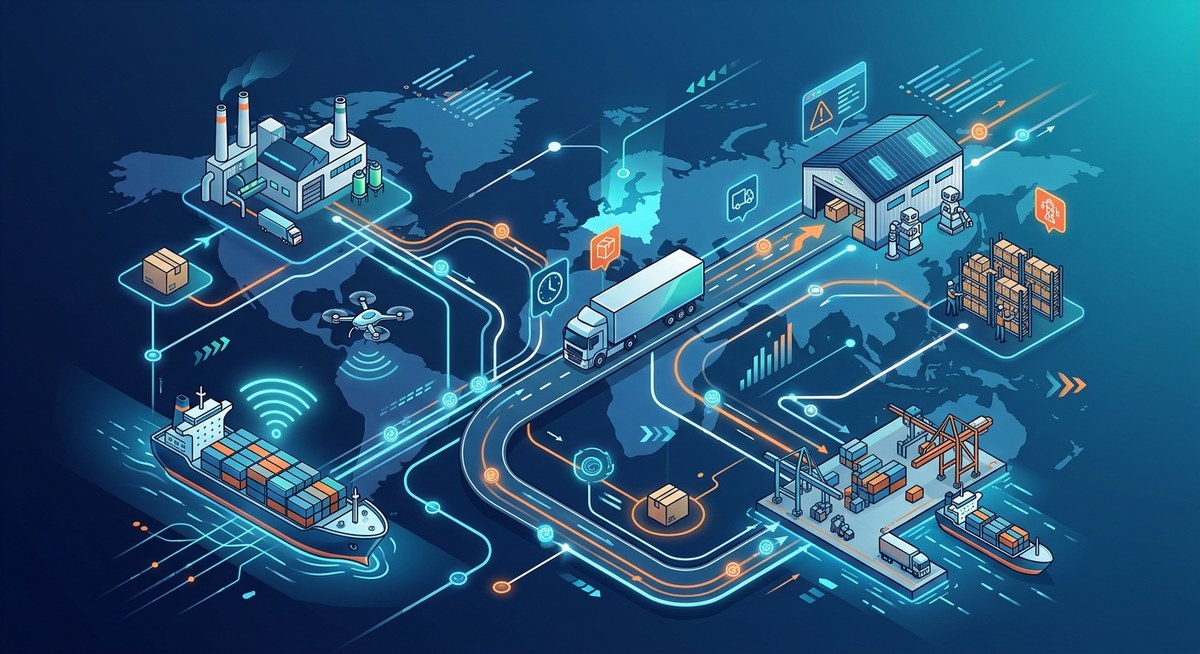
Imagine a world where your supply chain reacts the moment something changes in the real world, not days later from a static report. That world is becoming reality thanks to event driven architecture EDA. In logistics and supply chain management, EDA changes the game by turning every noteworthy change into an event that can be captured, processed, and acted upon at scale. For a Dutch portal focused on innovation and technology like Deflog, this is not just a technology trend; it is a practical blueprint for faster decisions, better customer service, and resilient operations. In this article we will unpack what EDA is, why it matters for supply chains, how it works in practice, and how teams can begin their own journey without getting overwhelmed by complexity.
What is Event Driven Architecture in Supply Chains?
Core idea
Event driven architecture is a design approach where systems react to events as they occur. An event is a state change or an notable occurrence, such as a shipment leaving a facility, a delay in transit, a stock level dropping below a threshold, or a packaging anomaly detected by a sensor. In an EDA, producers publish events to a lightweight channel or broker, and one or more consumers subscribe to those events to take actions or make decisions. The producer and consumer do not need to know about each other directly; they are decoupled. This decoupling enables independent scaling, easier integration of new systems, and faster, more flexible workflows.
Why EDA is critical for modern supply chains
- Real time visibility: Stakeholders see the ground truth as it unfolds rather than relying on historical reports.
- Faster disruption response: When a shipment is delayed or a warehouse bottleneck appears, the system can reroute, reallocate resources, or alert customers instantly.
- Agile innovation: Teams can add new event producers or new consumers without rewriting existing integrations.
- Improved customer experience: Clients get timely updates and accurate ETAs driven by live events rather than delayed spreadsheets.
- Better fault isolation: Problems can be traced to specific events and reactive layers without disturbing the entire system.
What it enables in logistics
- End-to-end traceability from supplier to doorstep
- Dynamic orchestration of transportation, warehousing, and last mile
- Proactive exception handling and proactive customer notifications
- Data driven decision making across internal teams and external partners
Key Components of Event Driven Architecture in Supply Chains
Event producers and consumers
- Producers generate meaningful events: order placed, order picked, loaded, in transit, arrived at hub, delayed, damaged, delivered, or returned.
- Consumers subscribe to events and perform actions: update inventory, trigger replenishment, notify carriers, adjust ETA predictions, or kick off quality checks.
Event brokers and channels
- The broker acts as the nerve center for events, routing them to interested consumers.
- Popular patterns include pub/sub and event streaming. Pub/sub focuses on notifying subscribers, while streaming supports high volume, ordering, and replayability.
Event schemas and governance
- Consistent event definitions ensure that producers and consumers speak the same language.
- Schema evolution strategies allow changes to be rolled out without breaking consumers.
- Metadata, lineage, and auditing help with compliance and governance.
Event types and semantics
- At least once delivery versus exactly once delivery: trade offs between reliability and complexity.
- Idempotent event processing to avoid duplications.
- Temporal aspects: event time versus processing time.
Event mesh and architecture patterns
- Event mesh refers to a global overlay of interconnected event brokers and streaming platforms.
- Patterns include publish/subscribe, event streaming, choreography, and orchestration.
Observability and resilience
- Logging, tracing, and metrics across producers and consumers.
- Circuit breakers, retries, and dead letter queues to handle failures gracefully.
How EDA Works in Practice in Logistics
End to end data flow
- A sensor or system detects a state change and emits an event.
- The event is published to an event broker.
- Subscribed downstream systems receive the event and react.
- Reactions can include updating dashboards, initiating routines, or creating new events.
- The system learns from events and continuously improves rules and workflows.
Publish/Subscribe vs Streaming
- Publish/subscribe is great for broad notifications where many recipients respond to events.
- Event streaming adds the ability to process data in order, replay events for debugging, and perform complex analytics on a continuous stream.
Orchestration vs Choreography
- Orchestration centralizes control in a coordinator that directs actions across services.
- Choreography distributes control to the services that listen for relevant events and act independently.
- In logistics, a hybrid approach often works best: choreography for responsive, low touch processes and orchestration for complex end to end flows.
Idempotency and delivery guarantees
- Idempotent handlers ensure repeated events do not cause duplicate actions.
- Decide on delivery semantics (at least once, exactly once) based on business impact and technical feasibility.
Data quality and schema evolution
- Use clear versioning for event schemas.
- Maintain backward compatibility where possible and plan deprecation windows for breaking changes.
- Validate events at the edge where possible to catch malformed data early.
Use Cases in Supply Chains
Real-time inventory visibility
- Real-time stock levels across warehouses, DCs, and retail points of sale.
- Automated replenishment triggers when thresholds are breached.
- Cross-location visibility reduces stockouts and overstock situations.
Demand sensing and dynamic replenishment
- Streaming point of sale data and market signals feed adaptive forecasting.
- Inventory allocation can shift in real time to high demand channels.
Transportation and last mile
- Carrier updates and ETAs adjusted on the fly as events flow from GPS devices and telematics.
- Dynamic route optimization based on current conditions and constraints.
Warehouse and fulfillment operations
- Slotting optimization changes as events indicate changes in throughput.
- Labor planning adapts to live work queues and shoulder periods.
Recall and traceability
- Track and isolate affected lots with precise event trails.
- Accelerate recalls by tracing product provenance and delivery history.
Disruption response and contingency planning
- Automated playbooks react to disruptions like port congestion or weather events.
- Proactive communications with customers and partners to mitigate impact.
Implementation Patterns and Best Practices
Step by step blueprint to start
- Map the current landscape: list existing systems, data sources, and decision points.
- Define a practical event taxonomy: decide which events matter for your top processes.
- Choose an architecture pattern: pub/sub for notifications, streaming for analytics, or a hybrid.
- Build a minimal viable ecosystem: one producer, a broker, and a couple of consumers around a critical flow.
- Establish governance and security: access controls, data privacy, and audit trails.
- Pilot, measure, and iterate: track improvements and add complexity gradually.
Architecture patterns to consider
- Event mesh: a network of brokers that enables seamless event routing across domains and clouds.
- Choreography: services react to events in a decentralized way to execute a business process.
- Orchestration: a central director coordinates complex end to end flows.
- Saga patterns for distributed transactions: ensure consistency across multiple services without locking resources.
Data architecture considerations
- Event schemas: prefer JSON for readability or Avro for compactness and schema enforcement.
- Backward compatibility: design events to be forward and backward compatible.
- Versioning: include a version in the event metadata to manage changes gracefully.
Security and governance
- Data privacy: protect personally identifiable information and comply with GDPR and other regional rules.
- Data lineage and auditing: maintain an auditable trail of who produced what and when.
- Access control: enforce least privilege on producers and consumers.
- Encryption in transit and at rest: protect data across the pipeline.
Governance, Compliance, and Security
GDPR and data privacy considerations
- Pseudonymize or mask sensitive information when possible.
- Ensure lawful bases for processing, clear data subject rights, and retention policies.
- Maintain data provenance so it is clear who handled data and under what conditions.
Data lineage and auditing
- Track the end-to-end journey of each event.
- Document data transformations and routing decisions for compliance reviews.
Access controls and encryption
- Role based access control for producers and consumers.
- Use secure channels for event transport and encrypt sensitive content.
Platform Options and Vendors (Neutral Perspective)
- Open source event brokers: Apache Kafka, Apache Pulsar, RabbitMQ.
- Cloud native event services: AWS EventBridge, Azure Event Grid, Google Cloud Pub/Sub.
- Hybrid and multi cloud options: event mesh platforms and integration bus solutions.
- Data integration and analytics layers: stream processing frameworks like Apache Flink or Spark Structured Streaming.
The goal is to pick a platform that aligns with your existing tech stack, skill set, and regulatory requirements. A phased approach often works best, starting with a focused pilot and gradually expanding to cross functional teams.
Getting Started with EDA in Your Supply Chain
Initial steps
- Start with a top pain point: identify a process that loses time due to delays or manual interventions.
- Define the event landscape around that process: what events would enable real time improvements?
- Assemble a small cross functional team: IT, operations, logistics, and compliance.
- Build a lightweight event backbone: one producer, one broker, and two or three consumers.
Common pitfalls to avoid
- Overengineering the event model from day one.
- Creating bottlenecks by centralizing control rather than decoupling systems.
- Neglecting data governance and privacy in pursuit of speed.
- Failing to measure impact with clear, actionable metrics.
Metrics to track ROI
- Lead time reduction from order to delivery.
- On time in full OTIF improvements.
- Inventory accuracy and stockout frequency.
- Throughput and capacity utilization of warehouses.
- Customer satisfaction and transparency improvements.
The Future of Event Driven Supply Chains
- AI powered event processing: automated anomaly detection and predictive responses.
- Digital twins: simulate event flows to test resilience and optimize routes before changes are made.
- Edge computing at warehouses: processing events near the source to reduce latency.
- Compliance automation: real time governance that enforces privacy and regulatory rules as events pass through the network.
Practical Tips for a Successful EDA Journey
- Start small but design for scale: choose a critical process to prove value while planning for broader adoption.
- Invest in data contracts: define the structure of each event so downstream teams can confidently rely on it.
- Embrace a culture of experimentation: test, learn, and incrementally improve rather than big upfront bets.
- Foster cross functional collaboration: keep ops, IT, and compliance in the loop from the start.
- Document and share learnings: create playbooks and reference architectures for reuse.
Real World Scenarios You Might Implement
- Scenario 1: Real time stock visibility across a multi echelon network
- Event producers: warehouse systems update stock levels, ERP updates orders
- Event broker distributes stock events to replenishment and demand forecasting modules
-
Consumers trigger alerts for low stock items and adjust procurement plans
-
Scenario 2: Dynamic transport routing in response to disruptions
- Producers emit events for traffic, weather, and port congestion
- A central or decentralized decision engine re optimizes routes and informs drivers
-
Customers receive updated ETA and notifications about changes
-
Scenario 3: Quality control through continuous sensor data
- IoT sensors emit event data from packaging lines
- Event stream triggers quality checks and automated acceptance or rejection workflows
- Feedback is used to adjust manufacturing parameters and supplier quality scores
Final Thoughts
Event driven architecture offers a compelling path for modernizing supply chains. It shifts the focus from batch updates and static dashboards to living systems that respond to real world changes in real time. For organizations looking to boost resilience, agility, and customer satisfaction, EDA provides a practical framework to orchestrate complex logistics networks with speed and precision. It is not a silver bullet, and success requires thoughtful event modeling, governance, and phased implementation. By starting with clear business goals, building an adaptable event backbone, and empowering cross functional teams, you can unlock measurable improvements in operational efficiency and service levels.
If you want to stay at the edge of logistics innovation, Deflog.org is where you will find practical insights on event driven architecture and other technologies shaping the future of supply chains. From voice controlled systems and GDPR compliance to electric trucks and geofencing, we cover the technologies that are transforming how goods move around the world. Explore how EDA connects with broader topics in the field and start your journey toward a more responsive and resilient supply chain today.
 Sanne Jansen