 By james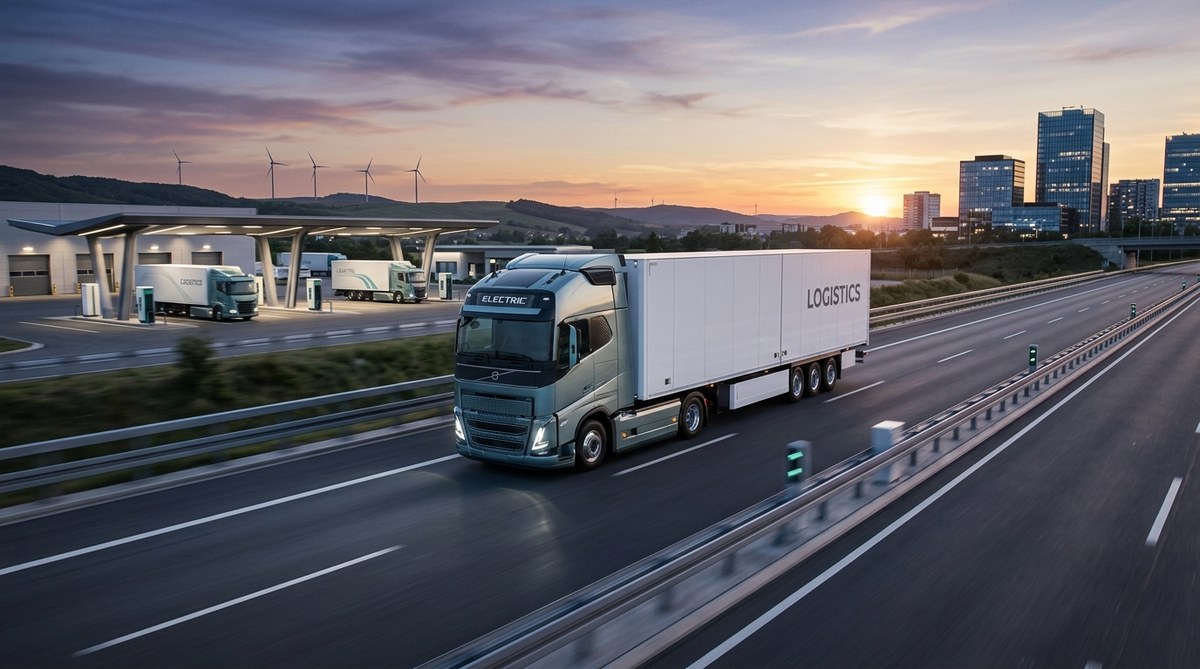
Electric trucks are no longer a distant future vision. They are becoming a practical, scalable solution that is changing how goods move from warehouse to door. At deflog.org we cover innovations and technology that matter for the logistics sector, and electric trucks are a perfect example of how new tech, policy shifts, and smarter operations come together to deliver cleaner air, lower costs, and more resilient supply chains. Whether you run a regional fleet or a national network, the shift to electric is reshaping planning, loading, and the very way you think about asset management.
In this article we untangle the major trends, opportunities, and challenges behind the electrification of freight transport. We look at policy drivers, cost considerations, charging infrastructure, route optimization, and the digital tools that help fleets operate efficiently in an electric world. We also share practical steps you can take to begin the transition today, plus a forward looking view on how innovations like geofencing, VR training, event driven architecture and GDPR compliant data gathering will support a smarter logistics operation.
The electric truck era is here and it is reshaping logistics
Electric trucks are not just about replacing diesel engines. They are about rethinking the whole logistics model. With higher efficiency in urban routes, lower fuel and maintenance costs, and the potential for quieter operations near sensitive areas, fleets are reconfiguring their networks around electric capabilities. The days when fuel costs dictated the pace of growth are giving way to a new structure where charging, data, and scheduling become central to performance.
Key shifts you should expect:
– A new emphasis on depot and on site charging at warehouses.
– A move toward dynamic scheduling that accounts for battery range and charging windows.
– Increased use of telematics and connected vehicle data to optimize routes, loads and maintenance.
– A broader adoption of smart technologies such as geofencing and energy-aware routing.
– More attention to driver training and safety in an electrified fleet.
Why now is the turning point for electric freight
Three forces are converging to accelerate adoption of electric trucks:
- Policy and regulation push
- Cities and regions are setting stricter emissions requirements and creating low or zero emission zones.
- Subsidies and grants are available in many markets to reduce upfront costs and defray charging infrastructure investments.
-
Public procurement and corporate sustainability goals create demand for zero emissions fleets.
-
Total cost of ownership becomes compelling
- While purchase price often remains higher than diesel, fuel and maintenance savings accrue quickly.
- Battery costs have fallen over the last decade, expanding the economic case for electrification.
-
Longer warranties and improved reliability of modern electric drivetrains lower lifecycle risk.
-
Tech and data enable smarter operations
- Real time data from connected trucks improves visibility across the supply chain.
- Advanced routing and energy management tools help minimize idle time and optimize charging.
- Geofencing and smart charging infrastructure turn charging into a controllable, predictable resource.
Zero emission zones and the regulatory landscape
Zero emission zones (ZEZ) and low emission zones are not hypothetical anymore. They influence where fleets can operate and when they must meet stricter standards. For many companies, ZEZ compliance is now a core determinant of network design and vehicle choice.
- In urban cores, fleets may be required to use zero emission vehicles during certain hours.
- Exemptions or incentives may exist for early adopters or for vehicles meeting specific energy efficiency criteria.
- Compliance is easier when the fleet is purpose built for electrification, including standardized charging and data reporting.
Practical implications:
– Plan routes that minimize time in ZEZ without compromising service levels.
– Invest in charging at or near high activity hubs to keep vehicles in the field rather than at yards.
– Build a data reporting strategy to demonstrate compliance and optimize future investments.
Substantial cost considerations and subsidies
Subsidies and incentives can dramatically alter the financial calculus of electrification. Buyers should assess both upfront benefits and ongoing operating costs.
- Upfront subsidies or low interest loans can reduce capex and speed up the procurement timeline.
- Operating cost savings come from lower energy costs per kilometer, reduced maintenance, and fewer drivetrain components.
- Maintenance costs for electric trucks are often lower due to fewer moving parts, although battery health and thermal management require attention.
A practical approach to subsidies:
– Map available grants and subsidies in your region and align them with your fleet replacement schedule.
– Document total cost of ownership including energy, maintenance, depreciation, and potential grid upgrades.
– Build a business case that includes non financial benefits such as improved air quality and quieter operations near communities.
Charging infrastructure and energy management
The charging strategy you choose has a direct impact on uptime, cost, and the reliability of service. There is no one size fits all; the best plan often combines multiple charging modes aligned with your operation.
Essential charging options:
– Depot charging at the main logistics hub for predictable cycles.
– On route or opportunity charging at strategic points to extend range between depot returns.
– Fast charging for outliers or critical legs when time is tight.
Key considerations:
– Battery size and range relative to typical daily routes.
– Availability and reliability of charging points with sufficient power supply.
– Grid capacity and potential need for on site transformers or energy storage systems.
– Scheduling software that synchronizes vehicle charging with peak grid times to minimize costs.
Practical steps to set up charging:
– Conduct a vehicle and route analysis to determine daily energy needs.
– Map available charging candidates along the most frequent routes.
– Pilot a small number of trucks with a mix of depot and on route charging to validate the plan.
– Scale charging capacity as the fleet grows and routes mature.
Route optimization and the power of data
Electrification makes route planning more data driven than ever. Battery constraints and charging windows add new layers to the optimization process.
- Dynamic routing can adapt to traffic, weather, and charging availability in real time.
- Geofencing allows fleets to automatically adjust routes when crossing into or out of restricted zones.
- Event driven architecture can orchestrate actions across the fleet in response to events such as a charger becoming available or a battery approaching depletion.
How to implement smarter routing:
– Integrate telematics with a route planning system to account for energy use and charging time.
– Use geofencing to enforce zone restrictions and automatically re route when needed.
– Build dashboards that show current energy reserves, ETA, and charging status at a glance.
– Schedule preventive maintenance based on actual usage rather than just time intervals.
Innovations that empower the electric fleet
Beyond basic charging and routing, several innovations are shaping how fleets operate in an electrified world.
- Energy aware telematics and driver assistance: On board systems can suggest the most energy efficient acceleration and braking patterns, reducing energy use.
- Voice controlled and hands free systems: These help drivers stay focused on the road while accessing necessary information and controls.
- VR based training: Virtual reality training helps drivers get up to speed with electric vehicle handling, charging etiquette, and safety procedures without risking real world exposure.
- GDPR compliant data collection: As more data flows from connected vehicles, robust data governance ensures privacy and compliance while enabling insights.
Practical tips:
– When selecting telematics, prioritize data privacy controls and transparent data sharing practices.
– Experiment with VR training modules to shorten learning curves for new hires.
– Leverage voice controlled systems to reduce distraction and improve efficiency.
The driver experience in an electric fleet
For many drivers the transition to electric brings a mix of benefits and new responsibilities.
Benefits:
– Quieter cabins reduce noise fatigue on long routes.
– Smooth acceleration and regenerative braking can improve comfort.
– Predictable daily routines with defined charging windows can simplify planning.
New responsibilities:
– Monitoring battery state of charge and planning charging stops.
– Understanding charging etiquette at shared hubs or in urban environments.
– Adjusting driving style to maximize range without sacrificing service levels.
Best practices to support drivers:
– Provide clear charging maps and real-time charging status updates.
– Run ongoing training focused on energy efficient driving and charging behavior.
– Create incentives that reward efficient driving and on time charging.
Data, privacy and compliance in an era of connected trucks
As fleets become more connected, data governance becomes essential. GDPR and privacy considerations apply not just to customer data but also to vehicle data, driver performance, and location information.
- Define who can access vehicle data and for what purposes.
- Minimize data collection to what is necessary for operations and safety.
- Use data anonymization and aggregation for analytics when possible.
- Establish incident response plans for data breaches or misuse.
A practical approach:
– Include data privacy requirements in supplier contracts and software licenses.
– Build an auditable data lineage that shows how data is collected, stored, used, and shared.
– Regularly train staff on data protection best practices and the importance of privacy.
Transition playbook: a practical path to electrification
If you are considering electrifying your fleet, a concrete plan helps reduce risk and accelerate value.
Step 1: Assess your baseline
– Inventory all routes, vehicles, and charging needs.
– Identify high value services where electric trucks can have an immediate impact.
– Understand ZEZ exposure and related compliance requirements.
Step 2: Build a business case
– Model total cost of ownership for a subset of the fleet.
– Include subsidies, energy price scenarios, and maintenance savings.
– Quantify non financial benefits such as air quality and community impact.
Step 3: Design the charging strategy
– Decide on depot charging, opportunity charging, or a mix.
– Determine charging hardware specifications and grid requirements.
– Plan for backup charging options to avoid service interruptions.
Step 4: Pilot and learn
– Start with a small number of electric trucks and a limited set of routes.
– Collect data on energy use, charging times, and uptime.
– Refine routing and charging strategies based on real world results.
Step 5: Scale with governance
– Establish a rollout plan for the rest of the fleet.
– Integrate new vehicles into the fleet management system with standardized processes.
– Build a framework for ongoing optimization using route data and energy metrics.
- Step 6: Invest in people and culture
- Train drivers and maintenance staff on electric vehicles and charging etiquette.
- Foster a culture of data driven decision making.
- Communicate progress and outcomes to stakeholders.
What the future holds: beyond pure electrification
Electric trucks will continue to mature, but other innovations will coexist and complement electrification.
- Hydrogen and plug in hybrids for longer distance segments or heavy payloads.
- Battery technology advances leading to longer ranges and shorter charging times.
- Advanced materials and weight reduction enabling more payload per trip.
- Digital twin simulations for fleet planning and energy management.
- Quantum computing and optimization tools to handle complex logistics problems at scale.
For practitioners, this means staying curious and flexible. The logistics landscape moves quickly, and readiness to adapt to new energy technologies and data driven tools will separate leaders from followers.
Practical checklist for deflog readers
- Define clear ZEZ exposure for your routes and plan accordingly.
- Build a hybrid charging strategy that fits your operation and grid capacity.
- Invest in fleet management systems that can handle energy aware routing and charging schedules.
- Implement robust data governance and privacy practices for connected vehicles.
- Train drivers with VR modules and energy efficient driving techniques.
- Explore subsidies and incentives early and align them with your fleet roadmap.
- Track both financial and non financial benefits to demonstrate value over time.
Case study inspired insights
To illustrate the real world impact, consider a mid sized regional distributor facing frequent urban deliveries. They adopted a depot charging strategy, added a handful of electric trucks to essential routes, and integrated charging information into their route planning system. Over the first year they saw a measurable drop in fuel costs, a reduction in maintenance events related to engine wear, and improved on time performance due to better predictability of charging windows. Beyond the numbers, the operation created a quieter, cleaner loading dock environment and a stronger sustainability story for customers and employees alike.
A note on alignment with broader tech trends
The electrification journey aligns with several tech trends that deflog.org covers in Innovations and Technology:
- Geofencing and location based services to manage zone compliance and dynamic routing.
- Event driven architecture that coordinates fleets, charging stations, and warehouses in real time.
- VR training and simulation to accelerate onboarding and safety readiness.
- Voice controlled systems to reduce driver workload and improve system usability.
- GDPR compliant data practices that enable powerful analytics while protecting privacy.
Final thoughts
Electrifying freight transport is not a single project but a strategic transformation. It touches vehicle choice, routing philosophy, infrastructure investments, and the culture of the organization. The benefits are tangible in emissions, cost, and reliability, but the journey requires careful planning, smart use of data, and a willingness to adapt.
If you are plotting the next steps for your fleet, start with a practical assessment, a solid business case, and a phased plan that places charging and routing at the center of operations. The infrastructure and technology to enable clean, efficient, reliable logistics are here today and continually improving. Embrace them, and your supply chain will not only meet the challenges of today but be ready for the opportunities of tomorrow.
 Sanne Jansen